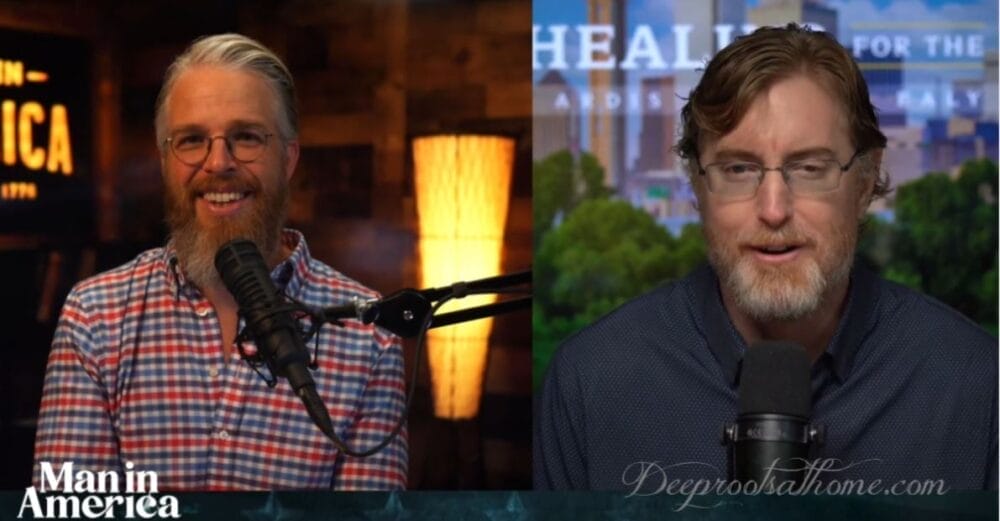
Dr. Bryan Ardis continues to bring forth new information that nicotine can act as an antidote for many various diseases. As I wrote about here, nicotine patches knocked a lengthy stint of long-covid out of my system very quickly, so this is worth bringing back up.
Dr. Ardis first explains how we’ve been tricked into believing that nicotine is harmful when, in fact, nicotine can halt, and even reverse many pretty dreadful diseases. Dr. Ardis is ALWAYS fascinating, and he brings receipts with historical medical proof.
Listen from minute 5:00 to 26:00 if you only have a few minutes now, and come back and finish the rest later. I believe this can be vastly helpful to anyone who just can’t seem to get well!
From 49:50, Dr. Ardis talks about how to take nicotine, dosages, what brands may be best, how the body responds, etc.
These claims are taken from the book A HISTORY OF THE MEDICINAL USE OF TOBACCO 1492–1860, published by Cambridge University Press:

Video timeline notes:
17:44 -22:00: Nicotine for cancers and cancerous growths, obesity and hunger regulation, and more.
26:40- 28:30: “chickenpox and tetanus” cured by tobacco… smallpox, also.
31:20- 33:45: Rockefeller’s discredited nicotine in 1910 (using the Flexner Report). “Nicotine is 4 times more anti-inflammatory than NSAIDs (Tylenol, Advil, ibuprofen)”. “Inflammation of joints is cured by nicotine.” Nicotine patches could replace prednisone for rheumatoid arthritis.
34:40: The Rockefeller effort to taint healthy natural tobacco products with toxins to essentially make a century long campaign against tobacco which actually resulted in massive numbers of deaths.
35:35: In 2016, Harvard published an FDA document listing the 599 toxic additives they allowed to be added to tobacco products, yet they only identified nicotine in these products.
50:00: Dosage, products, patching, lozenges, etc. (Note: we no longer use Rugby patches as they were irritating to the skin. See below text in red for what we are using now.)
And so much more.


Long before Europeans colonized the Americas, Indigenous peoples understood tobacco as a sacred medicine. The distinction between the sacred or ceremonial use of tobacco and commercial use is critical to understanding nicotine’s therapeutic potential.
The Neuroscience of Nicotine
Modern research is beginning to validate what Indigenous peoples already know: nicotine possesses unique neuroprotective and cognitive-enhancing properties. Nicotine works by binding to receptors in the brain called “nicotinic acetylcholine receptors.” These receptors are important in learning, memory, attention, and neuroprotection.
Matter of fact, the body is full of nicotinic acetylcholine receptors (nAChRs). God put them there for a reason!
When nicotine activates brain receptors, it sets off a chain reaction. Receptors known as α7 receptors allow calcium to flow into neurons, which triggers a cellular pathway that also gets activated by brain chemicals that help neurons stay alive and healthy. This causes the cell to make protective proteins that act like shields, preventing brain cells from dying when they’re under stress or attack. (source)
Evidence Under Testimony that Nicotine Is Not Addictive
In 1994, seven heads of the major Tobacco companies swore on oath before Congress, that nicotine is not addictive. University of California (UCSF) put out an article at the time titled: Tobacco CEO’s Statement to Congress 1994 News Clip: “Nicotine is not addictive.”
A 2015 Harvard study confirmed that nicotine is not addictive on its own, rather it’s the Pyrazines that are added that make it addictive.
Promising Research in Parkinson’s Disease
According to Psychology Today Neuroscience, “One of the most exciting areas of nicotine research involves Parkinson’s disease. Studies have consistently shown that (nicotine only) smokers have a significantly reduced risk of developing Parkinson’s disease.”
The potential for nicotine therapy extends beyond Parkinson’s to Alzheimer’s disease and other neurodegenerative diseases. A study performed at Vanderbilt University Medical Center showed that nicotine can improve attention, memory, and cognitive processing in both healthy individuals and those with mild cognitive impairment. The improvements appear to be more pronounced in individuals carrying the APOE4 gene variant, which increases Alzheimer’s risk.
Chronic inflammation in the brain contributes to all neurodegenerative diseases, and nicotine’s ability to reduce inflammation may explain many of its protective effects.
Nicotine has also showed promise as a treatment for depression, attention-deficit hyperactivity disorder, Tourette’s, and schizophrenia.
Unlike tobacco smoke, pure nicotine does NOT contain carcinogens and is already approved for smoking cessation. Nicotine appears to be safe when used according to directions. Side-effects are generally mild (if any) and may include skin irritation from patches, slight sleep disturbances, and occasional nausea as toxins come out of the body (herxing), so starting with 1 mg patches prevents this.
(Dr. Ardis discusses this in the video starting around 50:00.)
Dr. Ardis Suggested Forms of Nicotine with links:
Dr. Ardis discourages the use of conventional tobacco products due to their toxic additives, focusing instead on clean, controlled nicotine sources.
• Dr. Ardis currently doesn’t recommend nicotine gums because they almost all contain toxic ingredients such as asulfame potassium (similar to aspartame), hydroxytoluene, and artificial flavors.
• Nicotine patches: Check out Why I Now Use Nicotine Patches, But Have Never Smoked!
**NEW UPDATE: 9/10/26: We (and many I know) just started patching again as prevention against this fall’s new shedding mRNA fall shot. We find the Tolevita Herbal Anti-Smoke Patches with 21 mg of natural tobacco extract, cut into 4 smaller pieces (approx 5 mg each) or into half (approx 10.5 mg) depending on your weight, is superior to and gentler than the Rugby patch, because Rugby is not fully natural and can cause irritation of the skin at the application site.
• Check out This Post for Recommended Patches, Doses & Directions For Use For Prevention, Long-Haulers COVID Sufferers, and for C-19 Vaccine-Injured.

• Organic, additive-free tobacco chewed (used conscientiously, not recreationally) or for use as a foot bath. He tells how to reverse arrhythmias here:
“This research reminds us to approach traditional medicines with respect and scientific curiosity rather than dismissal. It seems that the peoples, who first recognized tobacco’s healing properties and respected it, understood something that allopathic medicine is only now starting to appreciate: that compounds found in nature often possess both the potential for harm as well as the possibility of life-changing healing.” (source)
I have often pondered this verse:
“If you will diligently listen to the voice of the Lord your God, and do that which is right in his eyes, and give ear to his commandments and keep all his statutes, I will put none of the diseases on you that I put on the Egyptians, for I am the Lord, your healer.” ~Exodus 15:26
***For the Full Spike Protein Protocol to protect from transmission from the “V” and to help those who took the “V”, go here.
***If you found value in this writing, please share it, discuss it, and subscribe to my FREE newsletter. Independent, ad-free work like this spreads because of readers like you.
Also, please consider supporting my work by using my Amazon affiliate link when purchasing from there.

Censorship is real, so my Pinterest account was suspended; thankfully, a big part of my main board is still alive through this link!
You can also find me on Facebook, Gab, MeWe, X (Twitter), and Instagram.
Medical Disclaimer: I am no longer a practicing medical professional, and I am not doctor. I am a mother. I do seek scientific confirmation of the safety and effectiveness of the herbs and remedies I use. Using remedies is a personal decision. Nothing I say on this blog is intended to treat or prevent disease. Consult your own doctor.©2026 Deep Roots at Home • All Rights Reserved









Related