

There’s a lot of research showing arterial plaque and high blood pressure can be eased with nattokinase. If you’re looking for a natural way to support your heart, blood circulation, and even brain health, nattokinase is worth your attention.
For decades, mainstream medicine has leaned heavily on statins and surgical interventions, but these approaches usually address symptoms rather than root causes. Worse yet, many patients experience significant side-effects with long-term statin use, including muscle pain, liver damage, real increased risk of dementia, and diabetes. Rather than working like conventional cholesterol drugs or pharmaceutical blood thinners, it supports your body’s natural fibrinolytic pathways. (evidence of 300+ statin associated adverse effects here)
Nattokinase costs just pennies per day. And no drug company gets to make any money off of it.
Nattokinase SHRANK arterial plaque by 36% with ZERO adverse effects.
The study found 95.4% of patients taking 10,800 FU daily for 12 months experienced some degree of cardiovascular improvement.
The 36% plaque reduction was verified using carotid artery ultrasound. pic.twitter.com/rDeCggwgd0
— Nicolas Hulscher, MPH (@NicHulscher) August 29, 2026
“36% Plaque Reduction” Nattokinase Study Analysis
The landmark 16-year study involved administering high doses of nattokinase to participants who were observed to have high levels of lipids (e.g., triglycerides and cholesterol), a condition called hyperlipidemia. The dosage used was typically between 6,000 and 10,800 FU per day, exceeding the standard 2,000 FU dose routinely found online. Between 26 and 52 weeks (1 year), researchers found a significant reduction in carotid plaque size, with figures averaging around 36% in the high-dose group. Individual responses varied based on the type of plaque and overall metabolic health.
This reduction could lower the risk of strokes and heart attacks, potentially leading to a longer life and quality of life.
What Is Nattokinase?
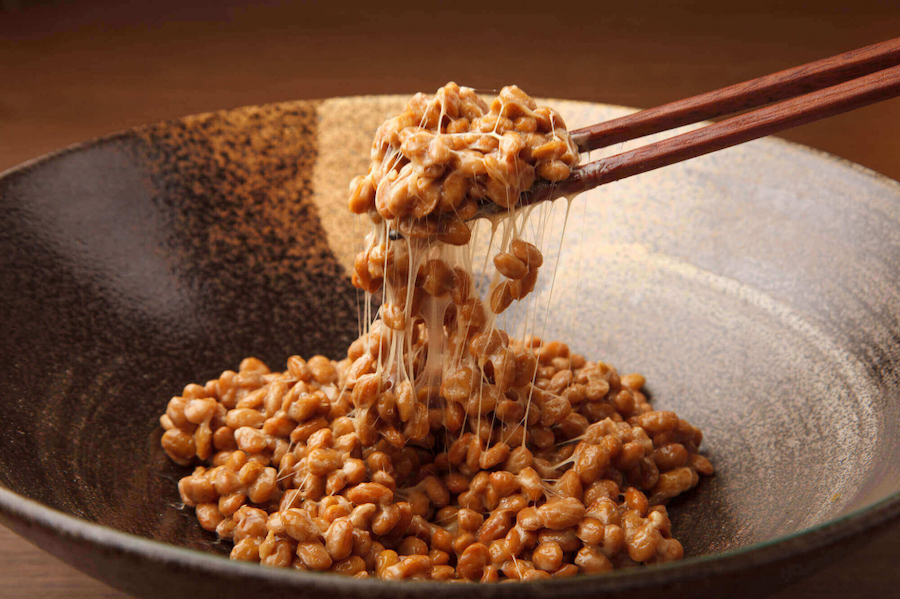
Nattokinase is an enzyme produced by B. subtilis var. natto, a strain of bacteria used to ferment boiled soybeans and make the popular Japanese food natto. Nattokinase is classified as a fibrinolytic enzyme because it dissolves blood clots by breaking down fibrin, a structural protein in blood clot formation. (source) You can attempt to ferment your own homemade natto, or you can find a local source of traditionally made natto.
A more recent study found that nattokinase (NK) at a dose of 10,800 FU/day effectively managed the progression of atherosclerosis and hyperlipidemia with a significant improvement in the lipid profile. A significant reduction in the thickness of the carotid artery intima-media and the size of the carotid plaque was observed. The improvement rates this time ranged from 66.5 to 95.4%. (source) And no adverse effects were reported at this high dose.
The findings were nothing short of remarkable.
Yet, this study found that a dose of 3,600 FU/day, NK was ineffective in lowering lipids and suppressing atherosclerosis progression. Could it be that consuming fermented natto as the Japanese traditionally do from their youth, totally prevents plaque build up?

Understanding Nattokinase’s “cleaning” mechanism: Fibrinolysis
Fibrinolysis is the biological process of breaking down fibrin, a fibrous protein involved in blood clotting. In atherosclerosis, fibrin acts like a mesh scaffold that traps cholesterol and calcium*, stabilizing plaque deposits on artery walls. Nattokinase works by directly dismantling this protein scaffold. Think of it as removing the rebar from concrete; without the internal structure, the clot or soft plaque becomes less stable and easier for the body to clear. This enzymatic action targets the binding material rather than just the fat itself. “Cleaning” in this context refers to dissolving these fibrin deposits to restore better circulation.
*Notice calcium is mentioned as part of the plaque deposit. That is why we do not want to supplement extra calcium as it ends up in arterial plaque leading to higher blood pressure. Doctors still erroneously recommend calcium supplements for many women. It’s complicated, but Dr. Suzanne Humphries explains it well here: Bone Density Tests, Fosamax vs Natural Help for Osteoporosis (The take-away: with D3 with K2, and other minerals mentioned in the post, your body will direct the calcium you ingest from your food, to where it belongs, not in your heart and blood vessels.)
Difference between blood thinning and plaque reduction
Most standard man-made (synthetic) blood thinners keep the blood thin so as to prevent clots – but they do not shrink existing atherosclerosis and can have serious side-effects. Nattokinase is a healing natural fermented food and is unique because recent studies show it can actually shrink existing plaque burden. This potential for structural change sets it apart. (source)
4 Cool Mechanisms of Action: How Nattokinase Works in the Body
Nattokinase operates on multiple physiological pathways to support vascular health, going beyond simple clot prevention. This section details the biological processes that occur after ingestion. (source)
1. Breaking down cross-linked fibrin
Already touched upon above, the primary mechanism of nattokinase is its ability to slowly break down cross-linked fibrin. It closely resembles plasmin, the enzyme your body naturally produces to dissolve clots. But even greater than that direct action, nattokinase also stimulates the production of more plasmin, so it’s a dual effect where the supplement works directly while also activating the body’s intrinsic repair systems. This enzymatic activity helps break down micro-clots that can impede circulation in smaller vessels. It effectively targets the “glue” holding arterial deposits together. (This is quite amazing and probably why there are no adverse effects!)
2. Impact on lipid profiles and cholesterol
Research indicates that nattokinase may exert secondary benefits on lipid markers. “Some studies show modest reductions in LDL cholesterol and triglycerides alongside fibrin degradation. While it is not a statin and does not block cholesterol synthesis, improved lipid profiles support cleaner arteries. Lowering circulating lipids reduces the raw material available for new soft plaque formation. There is also evidence suggesting nattokinase inhibits lipid peroxidation. Preventing fats from oxidizing reduces the inflammatory response in the arterial wall.” (source)
3. Reduction of blood viscosity and pressure
Nattokinase improves the physics of how blood flows. It exhibits mild ACE-inhibitor-like effects, which can help relax blood vessels and lower systemic blood pressure. Reduced blood pressure lowers the sheer stress exerted on the delicate endothelial lining of the arteries. Less physical stress means less damage and fewer signals for the body to patch walls with plaque.
4. Anti-inflammatory effects on blood vessels
Atherosclerosis is fundamentally an inflammatory disease. Nattokinase lowers markers like C-reactive protein (CRP) in clinical settings. Reducing vascular inflammation is critical for preventing plaque from becoming unstable or rupturing.
Timing and empty stomach & enteric-coated requirement
For the enzyme to reach the bloodstream, it must be taken on an empty stomach. This typically means taking it one hour before food or two hours after a meal. If taken with food, the enzyme will digest the proteins in your meal rather than working on arterial fibrin.
The need for enteric-coating is not yet strong, and there are other variables:

Note: Read that last sentence again: High dose “nattokinase… must be discontinued before surgery.”
Stacking Synergy: K2 and Aspirin Boost NK’s Power
“Researchers also observed that co-administering vitamin K2 and low-dose aspirin (81 mg) with nattokinase produced a synergistic effect–further improving cardiovascular outcomes. This makes biological sense: K2 helps direct calcium away from arteries and into bones, while aspirin’s anti-inflammatory effects may enhance NK’s clot-busting potential.” (source)
Subjects who exercised regularly, avoided smoking, and limited alcohol intake also saw greater benefits, suggesting that lifestyle optimization amplifies nattokinase’s therapeutic potential.
I’ve had this enteric-coated nattokinase (in the ziploc bag) in my medicine cabinet to help with a few varicose veins, but I didn’t know how truly valuable it could be if taken long term. And there are other nattokinase products to consider both enteric-coated or not already in the higher dosage here and here.
I take this pure aspirin (not extended-release and no toxic additives) or this White Willow Bark. Read more here: 11 Amazing Ways an 81mg Baby Aspirin/Day Can Help You
And D3 with K2.
Nothing I say here is to be considered medical advice. Talk with your own doctor and show him this evidence.
Once again, God’s freely-given natural healing food is a direct evidence of his love and providence for his creation: mankind.
“When I consider your heavens,
the work of your fingers,
the moon and the stars,
which you have set in place,
what is mankind that you are mindful of them,
human beings that you care for them?
You have made them a little lower than the angels
and crowned them with glory and honor.
You made them rulers over the works of your hands;
you put everything under their feet.” ~Psalm 8:3-6
***For the Full Spike Protein Protocol to protect from transmission from the “V” and to help those who took the “V”, go here.
***If you found value in this writing, please share it, discuss it, and subscribe to my FREE newsletter. Independent, ad-free work like this spreads because of readers like you.
Also, please consider supporting my work by using my Amazon affiliate link when purchasing from there.

Censorship is real, so my Pinterest account was suspended; thankfully, a big part of my main board is still alive through this link!
You can also find me onFacebook, Gab, MeWe, X (Twitter), and Instagram.
©2026 Deep Roots at Home • All Rights Reserved














Robin
Would you consider getting back into Podcasts?
Jacqueline
Robin, I wish I had the time to continue it. Also, I do this completely free (except for the small amount I make with my Amazon links), and it costs me out of pocket to have a virtual assistant to be the podcast voice, to have it planned and formatted, and all the details that goes into a podcast.
We are having our ninth and tenth grandbabies due in November, so I am one busy Nana. We have 8 under 6 years of age living pretty close to us! It is a wonderful season for me and it is my main focus.
Thanks for asking!
Jacqueline
T Barber
Where would I find this supplement? And is there one better than the other? Also, this is made from soy beans? Would this be bad for me if I’ve had breast cancer in 2010?
Thank you for all you do. Love reading your post, so much I have changed since I’ve been getting your post. May God bless you and your family.
Jacqueline
Hi, T,
Thank you for your kind words. I do have the one I think is the best choice linked in the post, so read to the end. It is the right dosage, enteric coated, and is the one I chose personally. Also the other herbs making it also a good value.
Natto IS fermented soy, but because it is fermented, some consider it not as estrogenic, after all Japanese women have very low rates of breast cancer – however there is mixed info on the web as to whether it should or should not be consumer. I searched this: “is fermented natto excessively estrogenic for those with breast cancer?” If you search that phrase and take some time to read through the articles that come up, I think it will help you and also talk with your natropathic or holistic doctor.
I personally would start making essiac tea (and maybe not nattokinase) as a preventative. It is very beneficial and will continue to strengthen your health and put a true damper on that old ca . https://deeprootsathome.com/everyone-with-any-cancer-should-be-taking-essiac-3x-daily/
I hope that helps,
Blessings,
Jacqueline
T Barber
Thank you so much, Jacqueline! I actually have some essiac tea in the pantry and have forgot all about that. I will make some soon! Thank you again for the information.
Jacqueline
T,
I hope it is from the Genuine Essiac company like in the post above or in this post: https://deeprootsathome.com/did-you-know-late-stage-cancers-can-and-do-just-disappear/ None other will do because of the missing sheep sorrel root. If it doesn’t contain that 8th ingredient, it is not effective. No other essiac tea recipe has the solid track record of remissions.
Sending peace,
Jacque
Steve Biel
I purchased the nattokinase from Amazon, the one you recommended. I used the link to get to the correct nattokinase.
The bottle does not say it is enteric-coated. Also, in the directions, it mentions to take it with a meal. I thought we were supposed to take it on an empty stomach.
I appreciate all that you do.
Jacqueline
Steve,
Actually, mine is enteric coated, the Micro-ingredients product in the bag, (not in the Micro-ingredients product in the bottle which is not enteric coated). I put in the wrong link..I apologize. Also, I found more definitive info on the enteric coating, and asked some questions. The science on enteric coating is not fixed, so I added a ss of some text as to where I think the data is right now. I am going to stay with what I am using So I don’t have to worry about using it between meals!
I did add several other possible products so people can choose which they prefer.
I hope that clarifies the current thinking better.
Blessings,
Jacque
steve biel
thanks – I appreciate what you do and that you take the time to answer questions.
Blessings to you and your family
T Barber
Jacque, sorry for the late response. The one I have is Starwest Botanicals brand, it does have the organic sheep sorrel herb not root but is missing the watercress kelp and red clover. I will get the brand you suggest very soon!
Thank you again,
God Bless,
T
Jacqueline
T Barber, I’m glad I asked you, then.. the Genuine Essiac is the only one that I trust is not a waste of money.
Praying for you now!
Jacqueline