
The connection between nutrition and brain health has long intrigued those seeking natural brain boosters to enhance mental clarity and slow cognitive decline. Public interest has increasingly turned toward functional foods that offer radical health benefits beyond their basic nutritional value. Among these, the humble egg has captured considerable attention, particularly for the reputed ability to support memory, attention span, and cognitive longevity.
And these claims can withstand scientific scrutiny. They are not just another nutritional myth.
The Egg: A Critical, Inexpensive Preventative Strategy
Alzheimer’s disease now affects an estimated 6.9 million Americans over 65. There’s currently no cure —making prevention strategies critical.
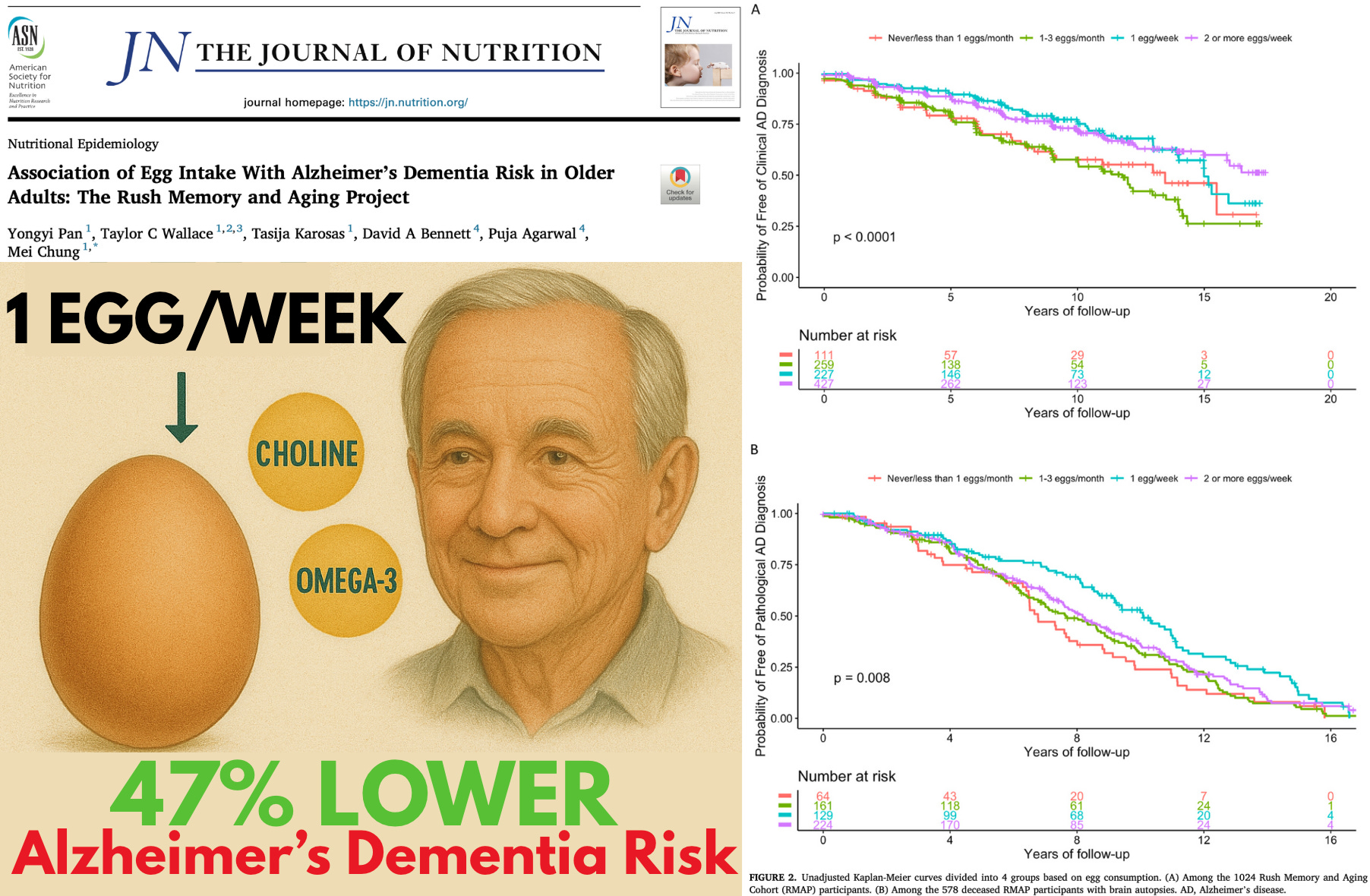
A recent study by Pan, et al, followed 1,024 older adults in the Rush Memory and Aging Project for an average of 6.7 years. Participants underwent annual cognitive assessments and lifestyle surveys, and a subgroup even donated their brains for postmortem analysis.
The results? Eating just one or more eggs per week was linked to a ~47% lower risk of developing Alzheimer’s dementia — and the protection is partly due to choline, a brain-essential nutrient found abundantly in eggs. This is the first U.S. study to examine egg intake against both clinical Alzheimer’s diagnoses and physical brain pathology. (source)
Related: Eggs Are the Healthiest, Full-Range Nutritive Food on the Planet
The Nutritional Profile of the Egg
At first glance, eggs may seem boring and deceptively simple: a shell, a yolk, and some translucent whites. But looking deeper, you’ll discover a nutrient dense matrix perfectly designed to support growth, development, and peak brain performance. A single large free range egg contains about 6 grams of high-quality protein, essential amino acids, and more than a dozen vitamins and minerals.
Yet the real stars, when it comes to the brain, are compounds like choline, Omega-3, lutein, and vitamin B12.
Eggs support both short-term cognitive performance and long-term neural resilience. This helps slow the biological processes underlying memory decay.
Choline ensures the brain has a steady supply of acetylcholine, which enhances synaptic neuro-plasticity—the ability of neurons to form and reform connections based on new information. This adaptability is essential for real-time decision-making, especially in high-pressure or information-rich environments.
During pregnancy, choline is crucial for fetal brain development. Adequate intake supports neural tube closure, hippocampal development, and lifelong cognitive potential. While prenatal supplements exist, incorporating choline-rich properly raised eggs into a mother’s diet can offer a more holistic and consistent nutrient source.
Why Free Range Eggs Are Nutritionally Superior & Egg Brands I Trust
This illustrates how the synergy between eggs and brain function begins early in life and extends well into adulthood.
Choline is an essential nutrient, meaning it can’t be made by the body. Brain-boosting supplements include synthetic choline sources such as citicoline or alpha-GPC, but the naturally occurring form in eggs is bio-available, effective, and has no unwanted side-effects.
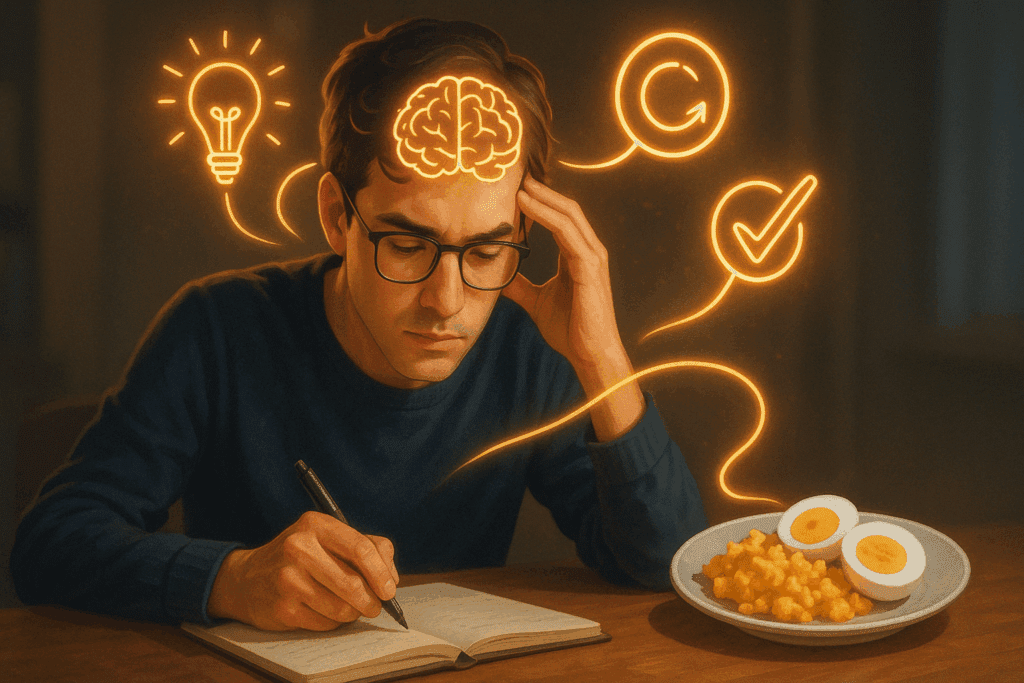
An Egg Contains Significant Lutein & B Vitamins, Protective in Cognitive Aging
Lutein is a bright yellow pigment responsible for the golden hue of egg yolks. For years, its benefits largely centered around macular degeneration and eye health, but researchers are now uncovering that aging individuals with higher lutein levels consistently perform better on memory and verbal fluency tasks. This suggests that eggs are good for senior brains not only due to their choline and B vitamin content but also because of lutein. The compound appears to modulate inflammation and oxidative stress—two biological processes closely tied to neurodegenerative diseases such as Alzheimer’s.
Younger students and professionals under cognitive load would benefit from their ability to enhance mental clarity and focus.
When consumed regularly, eggs serve as a low-cost, accessible way to increase lutein intake without requiring expensive supplements or exotic superfoods.
And an egg contains wonderful levels of B vitamins—especially B6, B12, and folate— that regulate homocysteine levels, an amino acid that, when elevated, is associated with increased risk of Alzheimer’s and cognitive decline. Eggs provide a steady supply of B12, which is particularly important for seniors who are notoriously deficient.
Note: Variants in the MTHFR gene can lead to higher levels of homocysteine, which is associated with health risks like heart disease and neural tube defects during pregnancy. So a couple free range eggs a day can be quite helpful.
To read more about how to “patch” the MTHFR genetic defect with specific methylated B vitamins, go here >>> MTHFR Simplified: Poor Methylation Prompts 100s Of Diseases
So what happens when you eat 3-4 eggs a day?
How do eggs compare to other brain foods like walnuts or blueberries?
Unlike plant-based brain foods, eggs also provide complete proteins that help maintain neurotransmitter synthesis and mental stamina. Including a combination of eggs, nuts, and berries creates a synergistic approach to brain nutrition that supports memory, focus, and mood balance.
Wild Blueberries: 11 Distinct Anti-aging Benefits from a Tiny, Potent Berry
Regular consumption of eggs – even just 1 a week –helps build a dietary foundation for neurotransmitter stability, particularly for individuals facing high cognitive demands. It’s important to consider portion control and food synergy. For instance, pairing eggs with vegetables and whole grains offers better cognitive support than consuming eggs with processed meats or refined carbs.
Some people with ADHD really benefit from consistent intake of protein to avoid impulsive behavior and attention dips, making eggs a worthwhile nutritional therapy.
Our Creator has given us such amazing, life-giving gifts (James 1:17)!
“The art of healing comes from nature and not from the physician. Therefore, the physician must start from nature with an open mind.” ~Paracelsus
***For the Full Spike Protein Protocol to protect from transmission from the “V” and to help those who took the “V”, go here.
***If you found value in this writing, please share it, discuss it, and subscribe to my FREE newsletter. Independent, ad-free work like this spreads because of readers like you.
Also, please consider supporting my work by using my Amazon affiliate link when purchasing from there.

Censorship is real, so my Pinterest account was suspended; thankfully, a big part of my main board is still alive through this link!
You can also find me on Facebook, Gab, MeWe, X (Twitter), and Instagram.
Medical Disclaimer: I am no longer a practicing medical professional, and I am not doctor. I am a mother. I do seek scientific confirmation of the safety and effectiveness of the herbs and remedies I use. Using remedies is a personal decision. Nothing I say on this blog is intended to treat or prevent disease. Consult your own doctor.©2026 Deep Roots at Home • All Rights Reserved













Related