

To find out what is being used to color the farm-raised salmon one buys (or eats in restaurants), I decided to do some research. And what I found out may surprise you.
What Actually Makes Salmon Pink
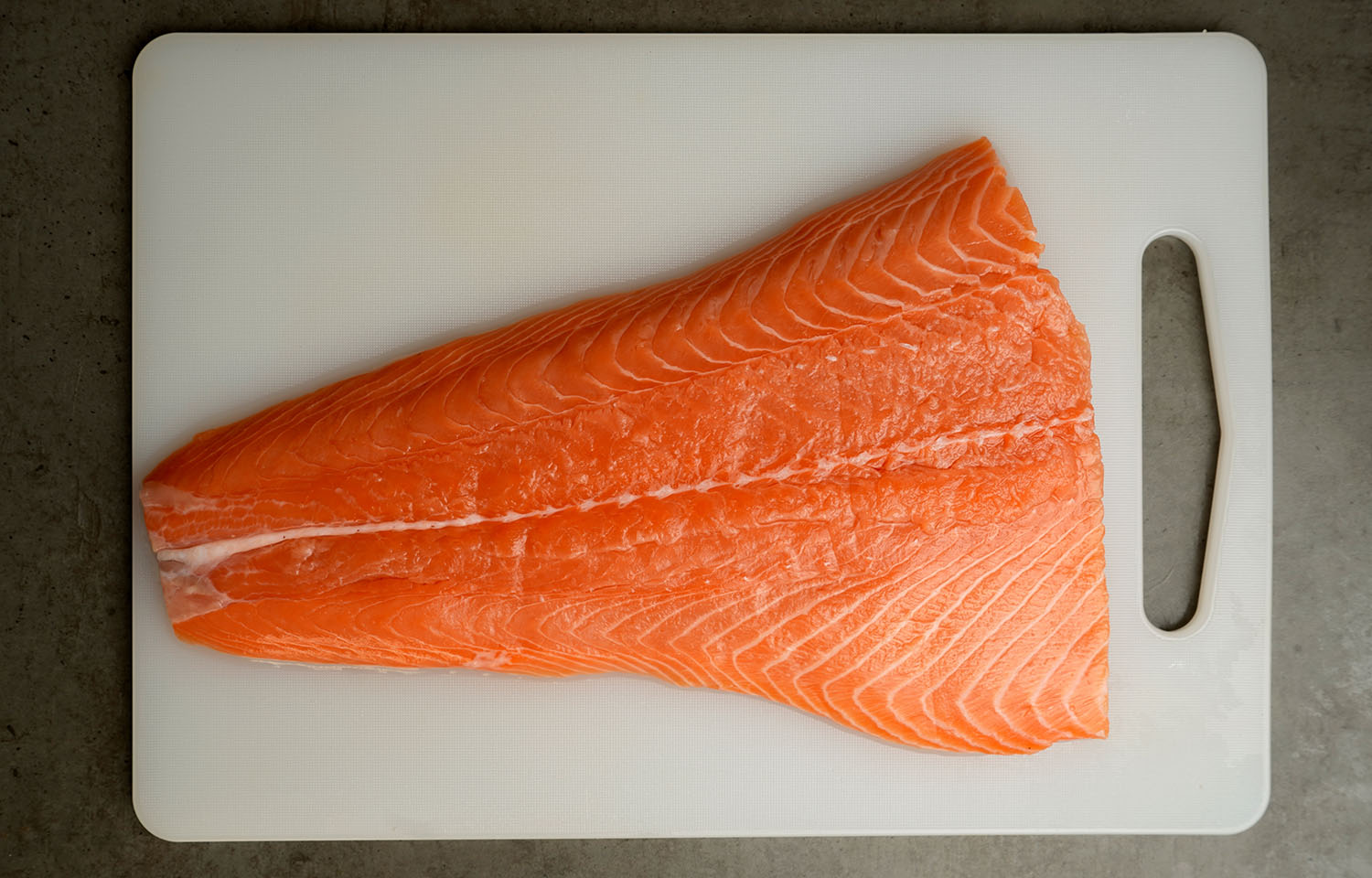
In the wild, salmon don’t metabolize that bright pigment on their own. They get it naturally by eating krill, shrimp, and other crustaceans that feed on microalgae which contain abundant natural astaxanthin. It’s basically the same compound that gives flamingos their signature color and makes shrimp shells orange. This natural process is part of the ocean food chain.

Without sufficient astaxanthin in their diet, salmon will suffer ill-effects as it is essential for metabolic, immune function, and muscle, as well as a key nutrient in the protective coating on salmon eggs, which is the source of salmon eggs’ orange color.
“Farmed” salmon never see a krill or shrimp; instead they eat feed pellets created by scientists to mimic their diet in the wild.
Petroleum-based Astaxanthin
Essentially all astaxanthin used in aquaculture (fish-farming) is a petrochemical product. (source)
Artificial astaxanthin pigment is chemically different than its natural counterpart, and most of it is not bio-available to the fish. (source)
Thus, a farm-raised salmon’s added color isn’t natural at all.
NATURAL Astaxanthin, On the Other Hand, Offers Huge Benefits:
• It is 6,000 times better at fighting off free radicals than vitamin C.
• It is approximately 550 times better at fighting free radicals than that of vitamin E. (source)
• Astaxanthin outperforms CoQ10 800 times over in fighting free radicals. (source)
• As an antioxidant, astaxanthin is 200 times more effective than polyphenols. (source)
• In one randomized controlled trial, subjects who took astaxanthin for 12 weeks reported a significant boost in cognitive ability.
(I personally have taken this natural astaxanthin as an Internal Sunscreen & Antiaging Support for at least 6 years now.
The Synthetic Alternative That Farmed Salmon Eat
The same basic materials used to make plastics and fuel can be chemically converted into the pigment that colors your dinner.

In the early 1980s, Hoffmann La Roche developed and manufactured the first synthetic astaxanthin preparation, and later, Hoffmann La Roche sold the production rights to DSM (Denmark).
Synthetic versions of astaxanthin dominate because they’re cheaper and more available at industrial scales. The cost of astaxanthin is actually one of the most expensive components of salmon feed, highlighting its importance beyond just color.
Coloring the Fish
Salmon farmers don’t leave color to chance. According to research conducted by DSM, a company that supplies dye to salmon farmers, different intensities of salmon dye appeal to different consumer bases.

DSM offers a “SalmoFan” to their clients – kind of like a paint wheel, so salmon farmers can use this tool to decide how much pigment to add to achieve specific shades of pink. (source) The amount of astaxanthin added can be adjusted to achieve different shades of pink.
The deeper the color, the higher price retailers can charge.
Farmers are essentially painting fish to match consumer expectations.
What Regulations Say About Synthetic Astaxanthin
Synthetic astaxanthin has not been specifically approved for direct human consumption, but it is legal to use in salmon feed.
And when you eat that salmon, you inevitably end up getting some of that synthetic astaxanthin. (source)
The compound isn’t approved for you to consume directly, yet you consume it anyway through the fish.
The Transparency Problem for Consumers
A lack of transparency is a dangerous game to play with this generation of seafood consumers. Consumers increasingly demand to know what’s in their food and where it comes from. The salmon industry’s reluctance to openly discuss synthetic pigments creates suspicion.
Labeling varies wildly. The ‘color added’ label is a result of an FDA regulation that requires retailers to label foods containing color additives.
You might see this on some packages, though many farmed salmon products carry no such indication. Unfortunately, it is not always possible to tell the difference between wild and farmed salmon by reading the labels. (source)
The organization Oceana, found that 43% of the restaurants and shops they surveyed mislabeled salmon. The product is sometimes not labelled as “farmed” in the marketplace thus preventing shoppers from making informed decisions about their purchases. (source)
This lack of transparency prevents consumers from making truly informed choices. Let’s be real, this is all about marketing and masquerading as nature.
***For the Full Spike Protein Protocol to protect from transmission from the “V” and to help those who took the “V”, go here.
***If you found value in this writing, please share it, discuss it, and subscribe to my FREE newsletter. Independent, ad-free work like this spreads because of readers like you.
Also, please consider supporting my work by using my Amazon affiliate link when purchasing from there.
Censorship is real, so my Pinterest account was suspended; thankfully, a big part of my main board is still alive through this link!
You can also find me on Facebook, Gab, MeWe, X (Twitter), and Instagram.
Medical Disclaimer: I am no longer a practicing medical professional, and I am not doctor. I am a mother. I do seek scientific confirmation of the safety and effectiveness of the herbs and remedies I use. Using remedies is a personal decision. Nothing I say on this blog is intended to treat or prevent disease. Consult your own doctor.©2026 Deep Roots at Home • All Rights Reserved













Sue Beer
My son goes out to Lake Michigan salmon fishing with a buddy with a boat. He’s come home with some nice king salmon. We get our walleye from South Dakota where my daughter and family live. They fish the lakes around their area. Great Eating!!!!!!!
Jacqueline
Sue, you are all so blessed to have that accessibility to salmon that aren’t treated! ~J
Lisa
I don’t eat any fish at all anymore, regardless of where it came from. Unfortunately, there’s not a body of water anywhere in the United States that isn’t polluted to one degree or another. If it’s not toxic train derailments,it’s toxic Farm and ranch run-off, chemical companies dumping into rivers, streams and Lakes, then it’s whatever crap DARPA is spraying literally everywhere in the sky. Not sure why that’s still happening under Trump, I’m pretty angry he hasn’stopped it immediately, he is the commander in chief after all. Then there’s God’s beautiful Ocean that’s now a toxic waste dump. Here, have mega doses of radiation with your meal. Sorry to sound cynical, unfortunately it’s just the truth. The nice lady Sue Beer in the above comment should take fish samples & have them tested, she might be shocked at the results.