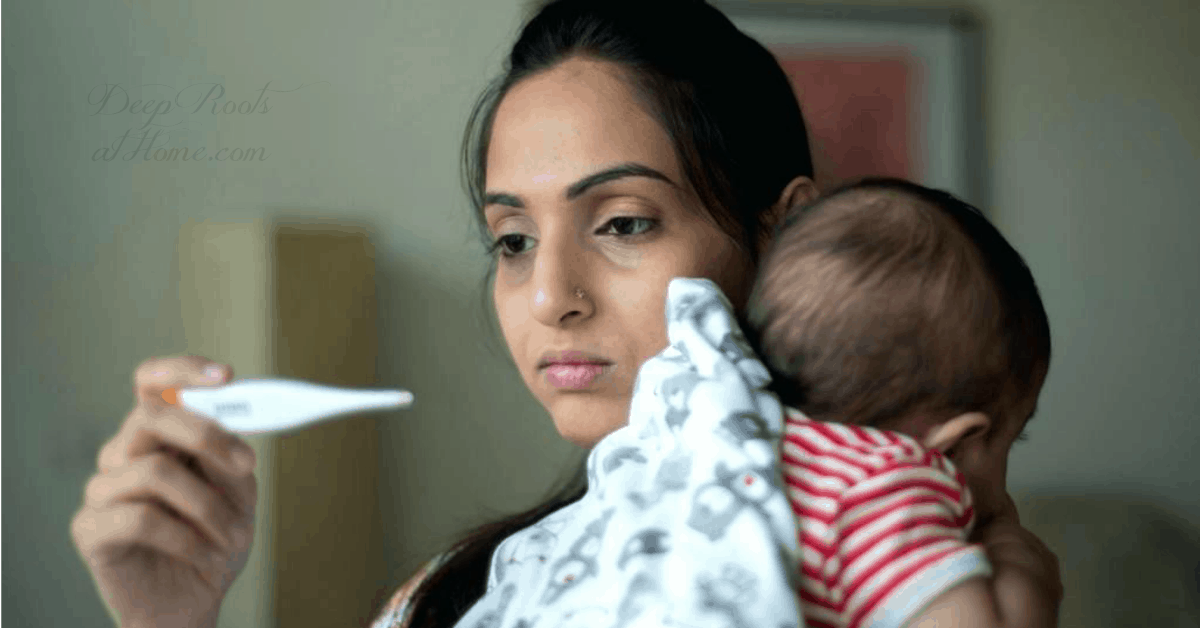
Hippocrates once stated, “Give me a fever, and I can cure any illness.” And as we shall see from the studies below, this is is not far from the truth!
As the title states, having febrile childhood infectious diseases when young – under 9 and even as an infant – protects us from having a variety of diseases and cancers as we get older.
It’s true. Childhood diseases challenge and strengthen the neuroimmune system, releasing toxins they absorbed in the womb. Studies show that the more infectious diseases and fevers a child has, the healthier they are as an adult – including lower risk of cancer and heart disease.
That may be the reason why it’s not unusual for parents to report physical and psychological developmental leaps after a bout of measles, mumps, chickenpox, etc.
Most parents believe they’re helping their children by giving them vaccines to prevent these “developmental” illnesses. But unknowingly they’re preventing their children from building healthy, strong immune systems.
A febrile disease is one that causes a fever (such as measles, mumps, rubella, chickenpox, pertussis and scarlatina).
By denying children the opportunity to have these diseases at the “right” time (and so train their immune system as it has been designed), we are now experiencing more serious, life-threatening disease starting as early as in late childhood and teens.
Published science is clear!
Studies Show that Childhood Febrile Diseases Prevent Cancers:
Lower Glioma Tumor Risk:
History of chickenpox in glioma risk: a report from the glioma international case-control study (GICC).
“In our study, a positive history of chickenpox was associated with a 21% lower glioma tumor risk, adjusting for age and sex. The protective effect of chickenpox was stronger for high-grade glioma, particularly among those under age 40. Our findings, which represent the results of the largest study to date on this topic, confirm the inverse associations previously reported.”
Lessen Childhood Blood Cancers / Leukemia
Article about a 2018 paper: Childhood leukemia linked to lack of childhood infections
“For the immune systems to function properly, it is imperative that the babies are exposed to bacteria and viruses right from infancy.”
Daycare in infancy and risk of childhood acute lymphoblastic leukemia: findings from UK case-control study
“These results support the hypothesis that reduced exposure to infection in the first few months of life increases the risk of developing acute lymphoblastic leukemia.”
Early life exposure to infections and risk of childhood acute lymphoblastic leukemia.
“Study results on daycare attendance, birth order and infections during the first year of life are consistent with the hypothesis that exposure to infections early in life is associated with a reduced risk of childhood acute lymphoblastic leukemia (ALL).”
Having Mumps Gives an Anticancer Benefit (Ovarian Cancers)
Mumps and ovarian cancer: modern interpretation of an historic association
“Prior to vaccination, mumps was generally a mild illness but could have sequelae including orchitis. Nevertheless, our study suggests there had been an unanticipated long-term anticancer (ovarian) benefits of a mumps infection, such as we have described in this paper. Despite the epidemiologic evidence that mumps might reduce the risk of ovarian cancer, this association has largely been ignored, probably due to the lack of a plausible biologic explanation.”
In Cardiovascular disease
Association of measles and mumps with cardiovascular disease: The Japan Collaborative Cohort (JACC) study
“Measles and mumps, especially in case of both infections, were associated with lower risks of mortality from atherosclerotic CVD.”
In General Cancers
“This reliable case-control study described that, with 95% probability, going through childhood diseases with fever (Febrile Infectious Childhood Disease or FICD) results in a reduction of between 5% and 32% of all cancers except breast cancer, with an average of 18%. This is very significant.”
“Exposures to febrile infectious childhood diseases were associated with subsequently REDUCED RISK for melanoma, ovary, and multiple cancers combined, significant in the latter two groups.” (source)
“Conclusion: Infections seem to play a paradoxical role in cancer development with these acute infections being antagonistic to later cancers.”
Protective From Hodgkin Lymphomas
“Our findings provide additional support to the hypothesis that infections by most common childhood pathogens (including measles) may protect against Hodgkin lymphoma (HL) or, at least, be correlated with some other early exposure, which may lower the risk of Hodgkin lymphoma (HL) in adulthood.” (PubMed Study)
“It is proposed that delayed infection could explain the increasing non-Hodgkin lymphoma (NHL) trends. (This suggests that each one year increment in the delay of infections would result in a 1.2% increase in the risk of NHL.) The model of delayed infection has been proposed also to explain increasing prevalence rates of asthma.” (PubMed Study)
“Measles and/or combined childhood infections are protective for Hodgkin’s disease in our data… The present data cannot distinguish between measles and total infections but are consistent with a specific protective effect of measles in school age children.” [They found that infection with measles during childhood cuts the risk of developing Hodgkin’s disease in half (OR = 0.53)] (Source: British Journal of Cancer)
Over Half of US Kids Now Suffer from a Chronic Illness or Disability
Is There a Lesson Here?
One of the greatest lessons I learned personally when our kids were young was to let a fever run its natural course and how to keep them comfortable.
I rejected visiting a pediatrician because kids usually pick up a secondary sickness in their weakened state or they attempt to pressure the parent to vaccinate their child – even while sick.
We learned not to worry. We learned by reading. We read every book available at the time. And we learned never to use Tylenol and what to do instead.
That’s why today I teach families to stop freaking out about normal febrile childhood illnesses and allow the fever to run safely.
Related Articles
• Neil Miller: Why people choose not to Vaccinate about this protection phenomenon
• Knocking Down A Fever Is Like Shooting Your Attack Dog In a Burglary
• Increase in cancer cases as a consequence of eliminating febrile infectious diseases, a Dutch study
• Measles vs. MMR Vaccine: Risks and Benefits about this protection phenomenon
• One of my favorite pediatricians, Dr. Paul Thomas, has a whole page with 23 peer-reviewed, published studies as well.
***If you found value in this writing, please share it, discuss it, and subscribe to my FREE newsletter. Independent, ad-free work like this spreads because of readers like you.
Also, please consider supporting my work by using my Amazon affiliate link when purchasing from there.
Censorship is real, so my Pinterest account was suspended; thankfully, a big part of my main board is still alive through this link!
You can also find me on Facebook, Gab, MeWe, X (Twitter), and Instagram.
****For the Full Spike Protein Protocol to protect from transmission from the “V” and to help those who took the “V”, go here.
©2026 Deep Roots at Home • All Rights Reserved









James mosley
This is interesting and crucial information ! Thank you
I grew up that “good “ way and have lived a long healthy life because of it !
At one time the officials wanted a couple to get a “blood test” before getting married . Was that done to prevent disease or stop mismatched blood types ??
And why did they stop it ?
Jacqueline
Yes, James! That used to be the standard and we are very far from that now. Thank you for your “good” insights!
Blessings,
Jacqueline